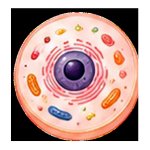
Cell
The basic building block of our body. Just as a house is made of bricks, our body is made up of millions of cells.
Genome
The complete set of genetic material in an organism, including all of its DNA—both genes and the non-coding regions.
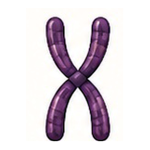
Chromosome
Thread-like structures inside cells that carry our genetic information. Humans usually have 46 chromosomes (23 pairs).
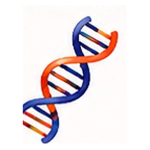
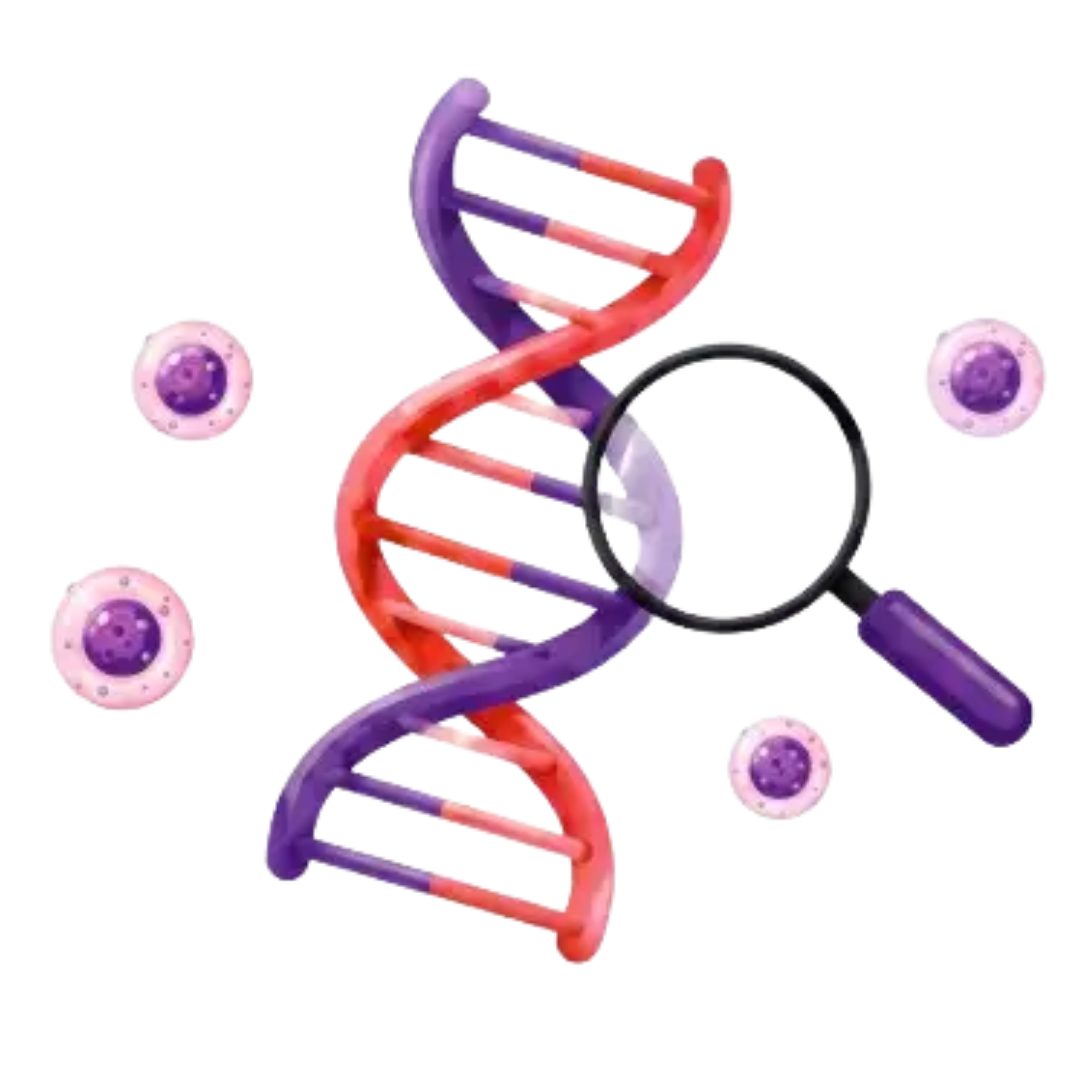
DeoxyriboNucleic Acid - DNA
The instruction manual of life. It contains all the information needed for growth, development, and body functions.

Dominant
A gene that shows its effect even when only one copy is inherited from either parent.
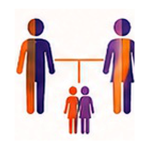
Recessive
A gene that causes a condition only when both copies of the gene (one from each parent) are altered.
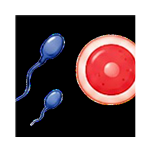
Gamete
Reproductive cells—sperm in males and eggs in females. Each carries half of the genetic information needed to create a baby.
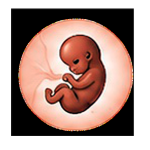
Embryo
The early stage of development of a baby, formed after the egg and sperm unite.
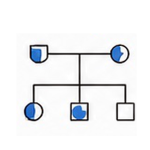
Pedigree
A family tree used by Genetic Counselors or healthcare professionals to understand how a genetic condition may be inherited across generations.
Proband
The first person in a family who comes to medical attention because of a genetic condition and helps identify whether other family members may be at risk.
Genetic Disease
A condition caused by changes in genes or chromosomes. Some genetic conditions are inherited, while others occur for the first time in an individual.
Genetic Testing
A test that analyses a person's DNA, chromosomes or proteins to detect changes or variants that may cause or increase the risk of a genetic condition, help in diagnosis, treatment decisions or carrier screening.